
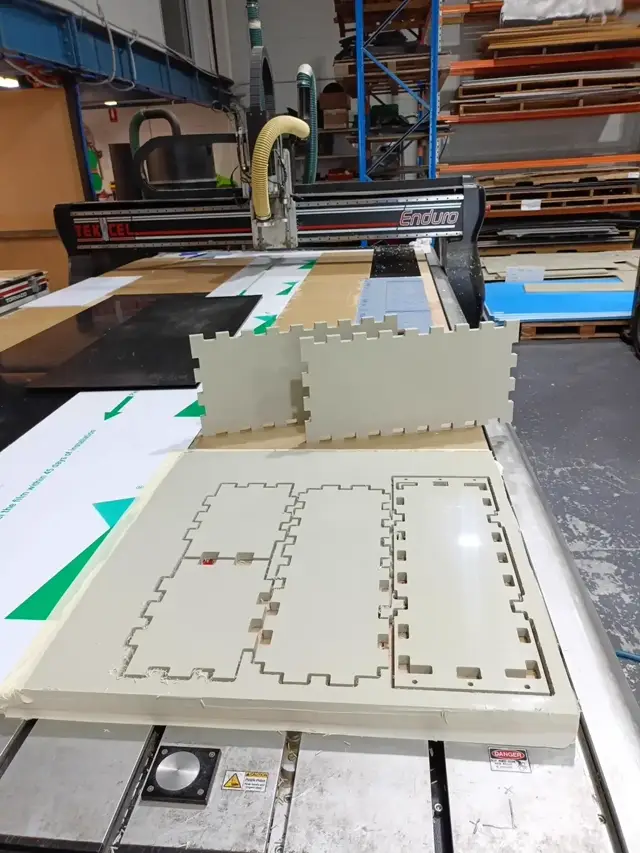
Materials / Polypropylene
Polypropylene (PP)
Lightweight, food-grade plastic in sheets, rods & tubes for water treatment, chemical processing, and fabrication.
-10 to +100°C
Operating range
4-25mm
Sheet thickness
PP-H / PP-C
Both grades stocked
Polypropylene (PP) is a chemical-resistant engineering plastic used wherever acids, alkalis or hot wash-down water would attack steel or break down HDPE . It is the workhorse material for plating baths, electroplating tanks, fume scrubbers, laboratory benches and food-grade processing equipment. PP runs hotter than HDPE in air (PP-H homopolymer to about 100°C continuous, PP-C copolymer to about 80°C) and resists a wider range of strong acids, which makes it the default pick for chemical processing across mining, electroplating, water treatment and food manufacturing.
Sizes and formats we stock
We stock polypropylene sheet in homopolymer (PP-H) and copolymer (PP-C) grades. Standard sheet sizes are 2440 x 1220mm and 3050 x 1525mm in 4mm, 5mm, 6mm, 8mm, 10mm, 12mm, 15mm, 20mm and 25mm. Polypropylene rod is available from 10mm to 200mm diameter, and PP pipe in standard chemical-line sizing. Welding rod in matching natural and grey is held in-house for fabrication.
Colours and grades
Natural (off-white translucent) and grey are stocked as standard. Black PP is available for UV-exposed work because uncoloured polypropylene is not UV stable for long-term outdoor use. PP-H (homopolymer) is stiffer and slightly more chemical-resistant; PP-C (copolymer) handles cold-temperature impact better and is preferred for tanks that sit outside or are exposed to vibration. We will recommend the right grade for your application at quote time.
Polypropylene compared to HDPE and PVC
Compared to HDPE, polypropylene tolerates higher temperatures and resists more aggressive chemicals (concentrated acids, oxidisers), but is more brittle in the cold and slightly harder to weld at long seams. Compared to PVC , polypropylene handles a wider temperature band, is fully weldable into watertight tanks and is food-safe. PVC is cheaper and easier to cement, so it wins on pipework and signage.
Why P&M Plastics for PP fabrication
We have been welding polypropylene tanks, bunds and ducting on the Gold Coast for more than three decades. Our hot air and extrusion welders are calibrated to PP, and our jigging gear lets us hold large tanks dead square during fabrication so flanges and nozzles line up. We routinely build chemical scrubbers, pickling tanks, anodising tanks and trade-waste tanks for Queensland clients.
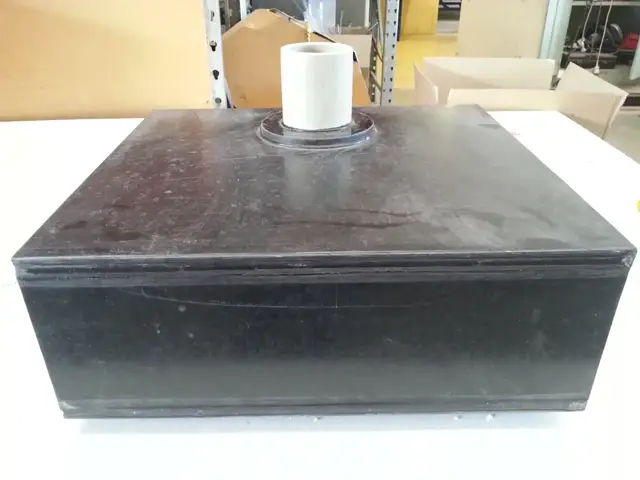
Polypropylene sump tank - front view
Key Properties
Common Applications
Project Gallery
How We Fabricate Polypropylene
We fabricate polypropylene using CNC routing, hot air welding for general seams, and extrusion welding for tank and bund construction (short-term welding factor around 0.8 per DVS 2203-1, long-term creep factor around 0.6 per DVS 2203-4, with parameters set to DVS 2207-11). PP machines cleanly, threads well and accepts mechanical fasteners. Adhesive bonding is not recommended; welded joints are the only reliable approach for watertight or load-bearing work.
Buy Polypropylene Online
Shop at Perspex Online
Compare Materials
See how Polypropylene stacks up
Cut to Size Calculator
Get instant pricing online
Related Services
CNC Router Services
Computer-controlled CNC routing for precision plastic cutting, profiling, and engraving.
Custom Plastic Fabrication
Full-service plastic fabrication: designed, cut, welded, and assembled to your exact specifications.
Plastic Tank Fabrication
Custom HDPE and polypropylene tanks for water, chemical, and industrial storage applications.
Plastic Welding
Industrial-grade plastic welding for tanks, pipes, bunds, and structural assemblies.
Products made from Polypropylene
Plastic Tanks
Custom-fabricated HDPE and polypropylene tanks for water, chemical, and industrial storage.
Caravan & RV Water Tanks
Custom fresh, grey and drinking water tanks fabricated to fit your caravan, camper or RV.
Underground Water Tanks
Custom below-ground HDPE and polypropylene water tanks built to save space and store more.
Ute & Truck Water Tanks
Under-tray, water cartage and slip-on water tanks fabricated for utes, trucks and trailers.
Industrial Water Tanks
Custom-fabricated HDPE and polypropylene tanks for industrial process, storage and wash-down.
Chemical Storage Tanks
Polypropylene, PVC and HDPE chemical storage, dosing and bunded tanks built for chemical resistance.
Boat Water Tanks
Custom-fabricated marine-grade HDPE water tanks built to fit your boat's hull exactly. Food-safe, UV-stabilised, and built on the Gold Coast.
Fire Fighting Water Tanks
Static water-supply tanks fabricated in HDPE for rural fire protection and compliance.
Bunds & Containment Systems
Secondary containment bunds and spill trays for environmental compliance.
Custom Fabricated Parts
Bespoke CNC-routed, laser-cut, and welded plastic components to your specs.
Plastic Sheets & Panels
Cut-to-size plastic sheets in HDPE, Acrylic, Polycarbonate, PVC, and more.
Eggcrate Louvres
Plastic eggcrate louvre panels for light diffusion, air grilles, and ceiling applications.
Handbag Base
Custom-cut acrylic and plastic base inserts for handbags and tote bags.
Buy polypropylene online
Our sister store Perspex Online sells polypropylene cut to size with national delivery.
Frequently Asked Questions
Should I use PP-H (homopolymer) or PP-C (copolymer)? +
PP-H is stiffer, slightly more chemical-resistant and the standard choice for warm-fluid chemical tanks. PP-C handles cold-impact and vibration better, which is why it is preferred for tanks that sit outside, on trailers, or in mobile equipment. Both are weldable; both are food-safe. Send us the application and we will recommend the right grade.
What chemicals can polypropylene handle that HDPE cannot? +
Polypropylene handles concentrated sulphuric, hydrochloric and nitric acid at higher concentrations than HDPE, and it tolerates higher continuous service temperatures in air (around 100°C for PP-H versus 80°C for HDPE). It is the standard tank material for anodising lines, pickling lines and acid neutralising tanks. It will still degrade in aromatic and chlorinated solvents.
Is polypropylene UV stable? +
Natural and grey polypropylene are not UV stable for long-term outdoor exposure and will become brittle after a few years of full sun. For outdoor use we specify either black PP with carbon black, or a UV-stabilised grade with HALS additives. Tanks installed inside a shed or under cover are fine in natural.
Can polypropylene be welded? +
Yes. PP welds the same way as HDPE using hot air or extrusion welding with PP rod. A clean extrusion weld will hold up under hydrostatic test to tank duty pressures and is the only reliable joining method for watertight or load-bearing work.
Is polypropylene food-grade? +
Yes, food-grade polypropylene is available and certified to FDA 21 CFR 177.1520. It is widely used for food processing equipment, surge tanks, brine tanks and dairy fittings. Specify food-grade at quote time so we draw from the right stock.
What is the maximum temperature polypropylene will hold? +
It depends on the grade. PP-H (homopolymer) is rated for continuous service in air to around 100°C, with a short-term peak around 110°C, but turns brittle near 0°C. PP-C (copolymer) trades some heat resistance for low-temperature toughness: continuous service to around 80°C, short-term peak around 90°C, and impact-tough down to -20°C. These are unloaded-in-air figures from Simona and Roechling datasheets; under sustained load (a tank wall under hydrostatic head, a pressurised pipe) the allowable design stress drops sharply and is calculated to DVS 2205. For chemical tanks above ambient temperature, tell us the medium, the load and the temperature swing so we pick the right grade.
Can polypropylene be glued? +
Adhesive bonding of polypropylene is unreliable because of its low surface energy. Flame or corona treatment plus a polyolefin primer can give a serviceable bond on signage or decorative work, but for tanks, bunds and any load-bearing fabrication we weld every joint.
Buy Polypropylene Online
Shop at Perspex Online
Compare Materials
See how Polypropylene stacks up
Cut to Size Calculator
Get instant pricing online
Need Advice?
Not sure if Polypropylene is right for your application? Our materials experts can help.
07 5535 7544Accepted File Formats
Cut to Size Calculator
Get instant pricing for plastic sheets cut to your exact dimensions. Choose your material, thickness, and measurements; order online with nationwide delivery.
Related Materials
More from Engineering Plastics
High-Density Polyethylene
Chemical-resistant, UV-stable engineering plastic. Available in sheets, rods & tubes for tanks, pipes, and industrial applications.
Polyvinyl Chloride (PVC)
Versatile, cost-effective plastic in sheets, rods & tubes for piping, ducting, and chemical containment.
Nylon (Polyamide)
High-strength engineering plastic in sheets, rods & tubes for gears, bearings, and mechanical components.
Polycarbonate (PC)
Impact-resistant transparent plastic in sheets, rods & tubes for machine guards, glazing, and safety barriers.
Ultra-High Molecular Weight Polyethylene
Extreme wear-resistant plastic in sheets & rods for conveyor guides, chute liners, and mining components.
Acetal (Delrin / POM)
Low-friction engineering plastic in sheets & rods for precision mechanical parts, gears, and bearings.
PETG (Polyethylene Terephthalate Glycol)
Tough, clear thermoplastic in sheets for displays, machine guards, and food-contact applications.
PTFE (Teflon)
Extreme temperature and chemical resistant plastic in sheets, rods & tubes for seals, gaskets, and bearings.
Other Materials
Acrylic (Perspex / PMMA)
Crystal-clear optical-grade plastic in sheets, rods & tubes for displays, signage, and protective barriers.
High Impact Polystyrene (HIPS)
Cost-effective, easy-to-form plastic sheets for signage, packaging, and vacuum forming.
Foam PVC (Foamex)
Lightweight, rigid foam board for signage, displays, and interior cladding.
Corflute (Corrugated Polypropylene)
Lightweight, fluted plastic sheet for signage, packaging, and temporary protection.
High Impact Acrylic
Modified acrylic with enhanced impact resistance for safety glazing and protective applications.
Aluminium Composite Panel (ACP)
Aluminium-faced composite sheet for architectural cladding, signage, and facades.
Lisa M.
3 months ago
“Amazing work on our acrylic display cases for the museum exhibition. Crystal clear, no imperfections. The team went above and beyond.”
David R.
2 months ago
“Good quality laser cutting work. The acrylic edges came out beautifully polished. Will definitely use again for our signage projects.”
Karen W.
4 months ago
“Had polycarbonate machine guards made for our factory. Perfect fit, great finish, and the team was really helpful with the design.”
Michael T.
2 months ago
“Excellent service and quality work. Had some custom acrylic display cases made and they turned out perfect. Fast turnaround too.”
Sarah L.
3 months ago
“P&M Plastics fabricated custom HDPE tanks for our water treatment plant. Professional team, great communication, and delivered on time.”
James B.
1 month ago
“We use P&M for all our CNC routing needs. Consistent quality and they really understand engineering plastics. Highly recommended.”
Ready to Start Your Project?
Get an accurate quote within 24 hours. Provide your specs, drawings, or dimensions and our fabrication team will respond fast.