
Materials / Nylon
Nylon (Polyamide)
High-strength engineering plastic in sheets, rods & tubes for gears, bearings, and mechanical components.
-40 to +100°C
Continuous service
0.15 to 0.30
Friction coefficient
70-85 MPa
Tensile strength
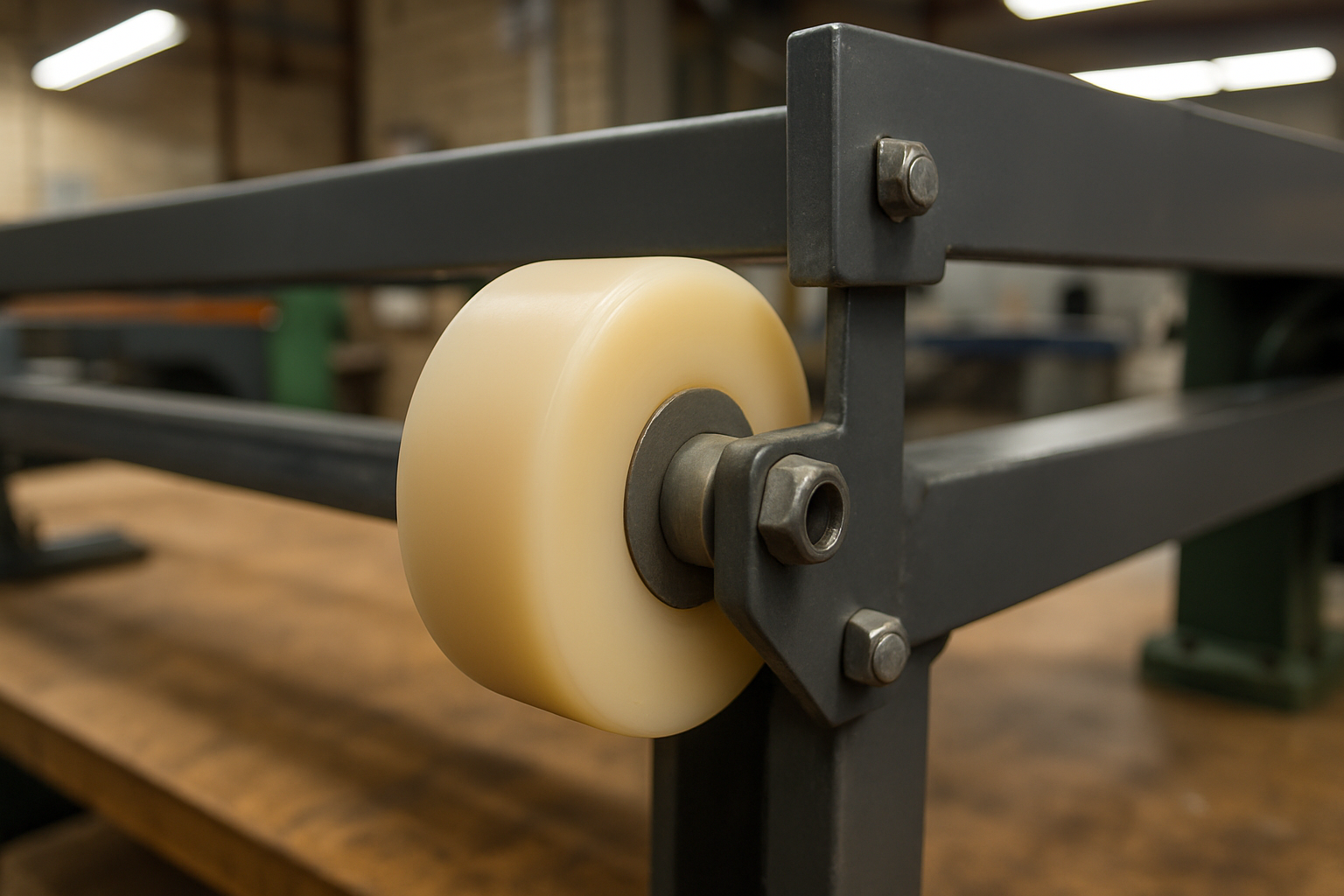
Nylon (polyamide, commonly PA6 or PA66) is the standard engineering plastic for machined parts that need strength, wear resistance and a low coefficient of friction. P&M Plastics machines nylon into bushes, sleeves, rollers, sprockets, gears, sliders and wear pads for mining, manufacturing, conveyor systems and agricultural equipment across South East Queensland.
Sizes and formats we stock
Cast nylon (Nylon 6) is held in plate and rod for general machining: plate from 10mm to 100mm thick in standard sheet sizes, rod from 10mm to 300mm diameter. Extruded nylon (Nylon 66) is stocked in smaller diameters for high-volume parts. Oil-filled, glass-filled and MoS2-filled grades are stocked for high-wear and high-load applications.
Colours and grades
Natural (off-white), black (heat-stabilised), blue (oil-filled, MC901 family) and green (MoS2-filled, MC907 family) are stocked. Black is preferred for outdoor exposure because uncoloured nylon will yellow in UV. Oil-filled grades cut friction and self-lubricate; glass-filled grades roughly double the stiffness at the cost of toughness.
Nylon compared to acetal and UHMWPE
Nylon is tougher and more impact-resistant than acetal , which makes it the right pick for high-shock parts and impact-loaded gears. Acetal is dimensionally more stable in wet environments (nylon absorbs water and grows slightly) and machines to a finer finish, which is why precision instrument parts go in acetal. UHMWPE has lower friction and better wear in abrasive sliding service, but it cannot match nylon for structural strength or thread strength.
Why P&M Plastics for nylon parts
We CNC mill and turn nylon to tight tolerances every week, and stock the cast nylon grades that machine to a finish, hold thread and run cool. For longer production runs we can quote either machined parts or near-net-shape semi-finished blanks. Our 35+ years of experience with engineering plastics means we can recommend the right nylon grade (natural, oil-filled, glass-filled or heat-stabilised) before you commit to a drawing.
Key Properties
Common Applications
Project Gallery
How We Fabricate Nylon
We machine nylon on CNC mills and lathes to engineering tolerances of 0.05mm. Cast nylon machines like soft brass: it cuts cleanly, threads to standard tap tolerances and accepts mechanical fasteners. Sawing, drilling and turning are routine. Nylon is not weldable in the same way as polyolefins; for assembly, mechanical fasteners or epoxy bonding are used.
Buy Nylon Online
Shop at Perspex Online
Compare Materials
See how Nylon stacks up
Cut to Size Calculator
Get instant pricing online
Related Services
CNC Router Services
Computer-controlled CNC routing for precision plastic cutting, profiling, and engraving.
Custom Plastic Fabrication
Full-service plastic fabrication: designed, cut, welded, and assembled to your exact specifications.
Cut to Size Plastics
Plastic sheets, rods, and tubes cut to your exact dimensions from a wide range of materials.
Products made from Nylon
Custom Fabricated Parts
Bespoke CNC-routed, laser-cut, and welded plastic components to your specs.
Plastic Sheets & Panels
Cut-to-size plastic sheets in HDPE, Acrylic, Polycarbonate, PVC, and more.
Wear Strips & Slide Rails
UHMWPE and nylon wear strips, guide rails, and conveyor liners for heavy industry.
Transom Plates
Custom transom plates for outboard motors in plastic (HDPE, nylon, UHMWPE) and aluminium (5083/6061). CNC-cut to your measurements at our Gold Coast workshop.
Buy nylon online
Our sister store Perspex Online sells nylon cut to size with national delivery.
Frequently Asked Questions
What is the difference between PA6 (Nylon 6) and PA66 (Nylon 66)? +
PA6 is slightly tougher and more impact-resistant; PA66 is slightly stiffer and holds a higher continuous temperature. The differences are small in most fabrication work. Cast nylon is typically PA6; extruded nylon is typically PA66. We will recommend the right one for the application.
Does nylon absorb water? +
Yes; nylon is hygroscopic. In typical indoor air (23°C, 50% RH) cast PA6 and extruded PA66 reach about 2.2 to 2.6 percent moisture at equilibrium, which is the figure quoted on most supplier datasheets. Under continuous full immersion in water at 23°C they climb to roughly 6.5 percent (cast PA6) up to 8 to 9 percent (extruded PA6/PA66) per Quadrant Ertalon ISO 62 data, with dimensional growth in the order of 0.2 to 0.3 percent per 1 percent moisture absorbed. For tight-tolerance parts in wet environments, specify a glass-filled grade (Ertalon 66 GF30 saturates around 5.5 percent) or switch to acetal, which absorbs around 0.2 percent and stays dimensionally stable.
Which nylon grade is best for wear? +
Oil-filled nylon (MC901, blue) is the standard pick for wear parts because it self-lubricates and cuts friction by around half compared to unfilled nylon. MoS2-filled nylon (MC907, green) gives slightly better dry-running performance and is preferred in high-load slide service such as mining pads.
Is nylon food-grade? +
Food-grade nylon certified to FDA 21 CFR 177.1500 is available and is used for food processing parts, conveyor guides and packaging line components. Specify food-grade at quote time, since most industrial nylon sheet and rod is not food certified.
How does nylon perform outdoors? +
Uncoloured nylon will yellow and become slightly brittle after long UV exposure. Heat-stabilised black grades and UV-stabilised grades are available for outdoor exposure; we use them as standard for any nylon part that lives outside or on agricultural equipment.
Can you replicate a metal part in nylon? +
In most cases yes. We turn and mill nylon to the same drawings as a metal part. Common metal-to-nylon swaps include bushings, sliders, sprockets, idlers and chain guides. The benefits are weight reduction, corrosion resistance, quieter running and self-lubricating service. Send us the drawing and we will confirm whether nylon (or acetal or UHMWPE) is the better pick.
Do you machine to a drawing? +
Yes. Send us a DXF, DWG, STEP or PDF and we will quote machined nylon parts to your tolerances. Most nylon parts ship within 5 to 10 working days from order, depending on quantity and complexity.
Buy Nylon Online
Shop at Perspex Online
Compare Materials
See how Nylon stacks up
Cut to Size Calculator
Get instant pricing online
Need Advice?
Not sure if Nylon is right for your application? Our materials experts can help.
07 5535 7544Accepted File Formats
Cut to Size Calculator
Get instant pricing for plastic sheets cut to your exact dimensions. Choose your material, thickness, and measurements; order online with nationwide delivery.
Related Materials
More from Engineering Plastics
High-Density Polyethylene
Chemical-resistant, UV-stable engineering plastic. Available in sheets, rods & tubes for tanks, pipes, and industrial applications.
Polypropylene (PP)
Lightweight, food-grade plastic in sheets, rods & tubes for water treatment, chemical processing, and fabrication.
Polyvinyl Chloride (PVC)
Versatile, cost-effective plastic in sheets, rods & tubes for piping, ducting, and chemical containment.
Polycarbonate (PC)
Impact-resistant transparent plastic in sheets, rods & tubes for machine guards, glazing, and safety barriers.
Ultra-High Molecular Weight Polyethylene
Extreme wear-resistant plastic in sheets & rods for conveyor guides, chute liners, and mining components.
Acetal (Delrin / POM)
Low-friction engineering plastic in sheets & rods for precision mechanical parts, gears, and bearings.
PETG (Polyethylene Terephthalate Glycol)
Tough, clear thermoplastic in sheets for displays, machine guards, and food-contact applications.
PTFE (Teflon)
Extreme temperature and chemical resistant plastic in sheets, rods & tubes for seals, gaskets, and bearings.
Other Materials
Acrylic (Perspex / PMMA)
Crystal-clear optical-grade plastic in sheets, rods & tubes for displays, signage, and protective barriers.
High Impact Polystyrene (HIPS)
Cost-effective, easy-to-form plastic sheets for signage, packaging, and vacuum forming.
Foam PVC (Foamex)
Lightweight, rigid foam board for signage, displays, and interior cladding.
Corflute (Corrugated Polypropylene)
Lightweight, fluted plastic sheet for signage, packaging, and temporary protection.
High Impact Acrylic
Modified acrylic with enhanced impact resistance for safety glazing and protective applications.
Aluminium Composite Panel (ACP)
Aluminium-faced composite sheet for architectural cladding, signage, and facades.
Lisa M.
3 months ago
“Amazing work on our acrylic display cases for the museum exhibition. Crystal clear, no imperfections. The team went above and beyond.”
David R.
2 months ago
“Good quality laser cutting work. The acrylic edges came out beautifully polished. Will definitely use again for our signage projects.”
Karen W.
4 months ago
“Had polycarbonate machine guards made for our factory. Perfect fit, great finish, and the team was really helpful with the design.”
Michael T.
2 months ago
“Excellent service and quality work. Had some custom acrylic display cases made and they turned out perfect. Fast turnaround too.”
Sarah L.
3 months ago
“P&M Plastics fabricated custom HDPE tanks for our water treatment plant. Professional team, great communication, and delivered on time.”
James B.
1 month ago
“We use P&M for all our CNC routing needs. Consistent quality and they really understand engineering plastics. Highly recommended.”
Ready to Start Your Project?
Get an accurate quote within 24 hours. Provide your specs, drawings, or dimensions and our fabrication team will respond fast.