
Materials / Foam PVC
Foam PVC (Foamex)
Lightweight, rigid foam board for signage, displays, and interior cladding.
1-19mm
Sheet thickness
3-5 years
Outdoor life
V-0
Flame rated
Foam PVC (commonly Foamex, Forex or Komatex) is a closed-cell expanded PVC sheet used as the default substrate for signage, display, exhibition stand work, light architectural cladding and short to medium-life outdoor signage. It is light, dimensionally stable, screen-print friendly, and CNC-routes to a clean edge with no chipping. P&M Plastics fabricates Foam PVC for sign makers, exhibition companies and shop fitters every week.
Sizes and formats we stock
Foam PVC sheet is stocked in 1mm, 2mm, 3mm, 5mm, 6mm, 8mm, 10mm, 13mm and 19mm in standard 2440 x 1220mm and 3050 x 1530mm sizes. The 5mm and 10mm thicknesses are the workhorse grades for most signage work.
Colours and grades
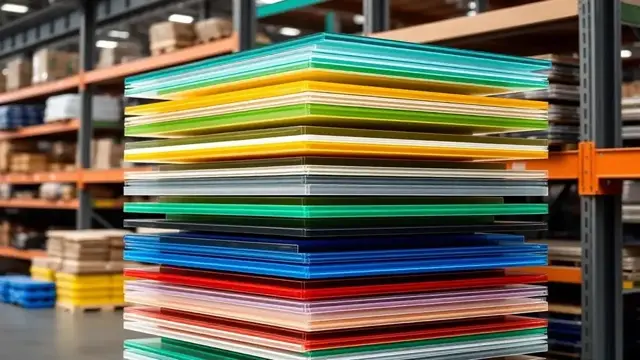
White is the standard colour for printed signage and exhibition work. Black, grey, red, blue, yellow and green are stocked for direct-coloured displays and architectural panels. Premium grades include high-density Foam PVC for thicker dimensional signage and lower-density grades for ultra-light exhibition builds.
Foam PVC compared to MDF and acrylic
Compared to MDF , Foam PVC is moisture-resistant, can be used outdoors for several years, and weighs about half as much for the same thickness. MDF is stiffer in larger panels and accepts a paint finish more cheaply, so it remains the right pick for indoor architectural work and shop fitouts where weight and moisture are not concerns. Compared to acrylic, Foam PVC is not transparent, but is far cheaper, easier to cut and easier to print on directly.
Why P&M Plastics for Foam PVC work
We CNC route Foam PVC to client-supplied artwork files (DXF, DWG, AI, SVG, PDF) for dimensional signage, exhibition pieces, shop fit-outs, free-standing letters and architectural cladding. Edges machine to a finished look without secondary processing and the surface takes ink, paint, vinyl and adhesives without surface preparation.
Key Properties
Common Applications
Specialty Foam PVC applications on the Gold Coast
Project Gallery
How We Fabricate Foam PVC
We fabricate Foam PVC using CNC routing for sharp clean edges, CO2 laser cutting for fine detail, V-grooving for folded signage and panel construction, and screwing or stapling for assembly. The sheet drills, screws and bonds easily; PVC-rated solvent cement gives the cleanest visible joint. Surface accepts most signage paints, inks and adhesive vinyls without surface preparation.
Buy Foam PVC Online
Shop at Perspex Online
Compare Materials
See how Foam PVC stacks up
Cut to Size Calculator
Get instant pricing online
Related Services
CNC Router Services
Computer-controlled CNC routing for precision plastic cutting, profiling, and engraving.
Laser Cutting Services
Precision laser cutting for intricate shapes, clean edges, and polished finishes.
Cut to Size Plastics
Plastic sheets, rods, and tubes cut to your exact dimensions from a wide range of materials.
Buy foam pvc online
Our sister store Perspex Online sells foam pvc cut to size with national delivery.
Frequently Asked Questions
Can Foam PVC be used outdoors? +
Yes. Foam PVC has good UV resistance and holds up well for 3 to 5 years of outdoor exposure, which makes it the standard for short to medium-life signage, real estate signs, event signage and temporary outdoor displays. For permanent outdoor signage (10+ years) step up to acrylic or aluminium composite panel.
What is the difference between Foamex, Forex and Komatex? +
All three are brand names for the same product class: closed-cell expanded PVC. There are minor differences in density, surface finish and colour range between brands, but for most signage and display work the brands are interchangeable. We will recommend the right grade for your application at quote time.
Can Foam PVC be printed on directly? +
Yes. Foam PVC accepts solvent, eco-solvent, UV and latex direct printing without primer or surface preparation, which is why it is the default substrate for most large-format printed signage and exhibition graphics.
Will Foam PVC sag in heat or sun? +
Foam PVC is dimensionally stable up to around 60°C, which covers most Australian outdoor signage applications. Above 60°C the sheet can soften and sag, so for any sign mounted in front of dark surfaces or in full sun the sheet should be specified at 5mm or thicker, with adequate support frames.
Can I screw or nail into Foam PVC? +
Yes. Foam PVC takes screws, nails and staples directly without pre-drilling. For load-bearing work (mounting heavy letters or panels) we recommend pre-drilling and using countersunk screws with a small backing washer to spread the load.
What thickness Foam PVC do I need? +
Most printed signage uses 3mm or 5mm. Free-standing dimensional letters and panels use 10mm to 19mm. Light architectural cladding goes from 6mm to 10mm depending on panel size and fixing centres. Send us the project and we will recommend a thickness.
Can I get Foam PVC cut to a logo or letter shape? +
Yes. Our CNC routers cut Foam PVC to any 2D shape from a vector file (DXF, DWG, AI, SVG, PDF). Most logo and letter jobs are quoted and cut within 24 to 48 hours.
Buy Foam PVC Online
Shop at Perspex Online
Compare Materials
See how Foam PVC stacks up
Cut to Size Calculator
Get instant pricing online
Need Advice?
Not sure if Foam PVC is right for your application? Our materials experts can help.
07 5535 7544Accepted File Formats
Cut to Size Calculator
Get instant pricing for plastic sheets cut to your exact dimensions. Choose your material, thickness, and measurements; order online with nationwide delivery.
Related Materials
More from Related
High Impact Polystyrene (HIPS)
Cost-effective, easy-to-form plastic sheets for signage, packaging, and vacuum forming.
Corflute (Corrugated Polypropylene)
Lightweight, fluted plastic sheet for signage, packaging, and temporary protection.
Aluminium Composite Panel (ACP)
Aluminium-faced composite sheet for architectural cladding, signage, and facades.
Other Materials
High-Density Polyethylene
Chemical-resistant, UV-stable engineering plastic. Available in sheets, rods & tubes for tanks, pipes, and industrial applications.
Polypropylene (PP)
Lightweight, food-grade plastic in sheets, rods & tubes for water treatment, chemical processing, and fabrication.
Acrylic (Perspex / PMMA)
Crystal-clear optical-grade plastic in sheets, rods & tubes for displays, signage, and protective barriers.
Polyvinyl Chloride (PVC)
Versatile, cost-effective plastic in sheets, rods & tubes for piping, ducting, and chemical containment.
Nylon (Polyamide)
High-strength engineering plastic in sheets, rods & tubes for gears, bearings, and mechanical components.
Polycarbonate (PC)
Impact-resistant transparent plastic in sheets, rods & tubes for machine guards, glazing, and safety barriers.
Lisa M.
3 months ago
“Amazing work on our acrylic display cases for the museum exhibition. Crystal clear, no imperfections. The team went above and beyond.”
David R.
2 months ago
“Good quality laser cutting work. The acrylic edges came out beautifully polished. Will definitely use again for our signage projects.”
Karen W.
4 months ago
“Had polycarbonate machine guards made for our factory. Perfect fit, great finish, and the team was really helpful with the design.”
Michael T.
2 months ago
“Excellent service and quality work. Had some custom acrylic display cases made and they turned out perfect. Fast turnaround too.”
Sarah L.
3 months ago
“P&M Plastics fabricated custom HDPE tanks for our water treatment plant. Professional team, great communication, and delivered on time.”
James B.
1 month ago
“We use P&M for all our CNC routing needs. Consistent quality and they really understand engineering plastics. Highly recommended.”
Ready to Start Your Project?
Get an accurate quote within 24 hours. Provide your specs, drawings, or dimensions and our fabrication team will respond fast.