
Black HDPE Sheet: Grades, Uses, and How to Order It
Black HDPE sheet explained: virgin vs recycled, UV resistance, common uses, fabrication tips and how to order cut-to-size black HDPE from P&M Plastics.
Black HDPE sheet is one of the most widely used engineering plastics in Australia. It is tough, chemical resistant, doesn't absorb water, and holds up outdoors where many other materials fail. If you are searching for black HDPE sheet, you probably already know you want HDPE. The real questions are which grade, what thickness, and how it should be cut and joined. This guide covers those questions, based on what we see across jobs at P&M Plastics.
What black HDPE sheet actually is
High-density polyethylene is a semi-crystalline thermoplastic with a very low moisture uptake, strong impact resistance and good resistance to many acids, alkalis and solvents. It is lighter than water, so it floats. Our general HDPE material page covers the base properties. This article looks at the black version.
Black HDPE is coloured with carbon black. That is more than cosmetic. Carbon black absorbs ultraviolet light, which is the main thing that degrades polyethylene outdoors. A black sheet will usually outlast a natural or light-coloured one in constant sun, and it hides dirt, scuffs and staining. Black is also the default colour for a lot of industrial and marine work because it looks neutral and stays that way.
Black HDPE sheet options: what to specify
Not all black HDPE sheet is the same. Four choices matter when you are specifying a job.
Virgin vs recycled
Virgin black HDPE is made from new resin and gives you consistent properties, a clean finish and predictable machining. Recycled black HDPE is made from reprocessed polyethylene. It can be a sensible, lower-cost option for hidden panels, packing, formwork, ground protection and similar jobs, but surface appearance and consistency can vary from sheet to sheet. If the part is visible or load-bearing, specify virgin.
UV stabilisation
If the sheet will live in direct Queensland sun for years, such as marine fittings, signage backing or outdoor equipment guards, mention that up front. It helps us advise on the right grade.
Thickness and sheet size
HDPE is supplied in a wide range of thicknesses, from thin lining sheet through to thick machining plate. Thin sheet is flexible and suits liners and covers. Thicker sheet is stiff enough for structural parts, wear strips and bases. Because HDPE is a flexible material, a thickness that feels adequate on paper can deflect more than you expect, so tell us how the part is supported and loaded and we will help you pick a thickness. Current stock sizes and thicknesses are best confirmed with us at the time of your enquiry.
Food contact
Black pigment and recycled content are generally not what you want for food-contact surfaces. If the part touches food, say so when you enquire so the right grade is considered, rather than assuming any black sheet will do.
Where black HDPE sheet is used
The same properties that make black HDPE popular in one industry make it useful in many. Common applications include:
Marine: boat boards, transom and mounting pads, hatch and step components, and anything that has to survive salt water and sun without rotting or swelling.
Industrial and manufacturing: machine guards, wear strips, chute liners, spacers, packers, jigs and fixtures, and chemical-resistant bases.
Construction and landscaping: edging, formwork faces, ground protection, pit and pond liners, and exposed panels that need to cope with moisture.
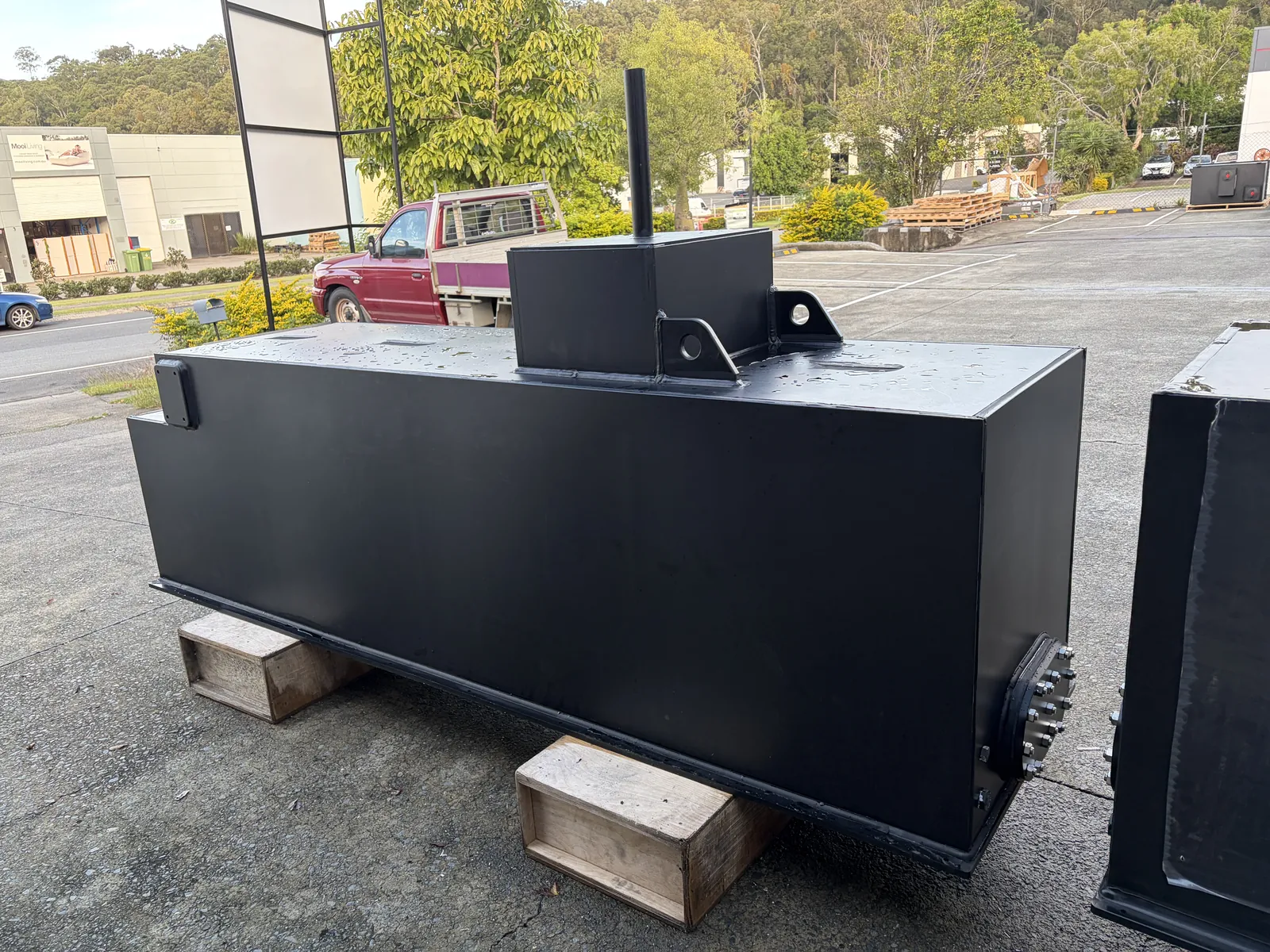
Tanks and containment: fabricated tanks, bunds and sumps where chemical resistance and weldability matter.
In wet areas, black HDPE often replaces timber products. Plywood is easy to work and rigid, but it can swell, delaminate and rot when it is constantly wet. HDPE won't absorb water, which is why it is the usual pick for bases, mounting plates and panels that live in the wet. For very high wear applications such as heavy sliding contact, UHMWPE is the step up from standard HDPE.
Fabricating black HDPE: what to know
HDPE machines cleanly, but it behaves differently from rigid plastics like acrylic or acetal. These are the main points we plan around.
Routing and cutting. Our CNC router cuts HDPE into shapes, slots, holes and pockets with sharp tooling. Dull cutters or heat build-up leave stringy swarf and rough edges, so tooling and feed rates matter. Laser cutting is generally not suitable for HDPE.
Joining. Standard adhesives won't hold on polyethylene. The proven method is plastic welding, where heat and a matching filler rod fuse the parts into one piece. For removable assemblies, mechanical fasteners work, provided you allow for movement.
Thermal movement. HDPE expands and contracts noticeably with temperature, much more than metal or timber. A black panel sitting in full sun will move more than a light-coloured one. Use slotted holes and leave expansion gaps on long runs, or the sheet will buckle.
Printing and finishing. Paint and ink do not take well on untreated polyethylene. If you need markings, consider routed or engraved detail rather than a surface coating.
How to order black HDPE sheet from P&M Plastics
We supply HDPE as cut-to-size plastics as well as machined and fabricated parts, so you can order a few panels or a full run of finished components. To get an accurate quote quickly, send us:
1. Dimensions and quantity. Finished sizes, thickness and how many you need. Drawings or CAD/DXF files are ideal for anything beyond straight cuts.
2. Grade. Virgin or recycled, and whether the part needs UV performance or food-contact suitability.
3. Application and environment. Where it will be used, what it is exposed to (sun, salt, chemicals, heat), and what loads it carries.
4. Processing. Holes, radii, edge finish, welding or assembly. Tell us up front, as it affects both thickness selection and cost.
If you are unsure between black HDPE and another plastic, such as polypropylene, UHMWPE or HIPS for lighter forming work, describe the job and we will point you to the right material rather than the most expensive one.
Need black HDPE sheet cut, routed or welded to your spec? Contact P&M Plastics with your sizes, quantities and application, and we will come back with advice and a quote from our Gold Coast workshop.
Price a rectangular tank online
Enter your sizes, pick HDPE, polypropylene or PVC, add fittings and a lid, and get an instant estimate for a welded rectangular tank up to 10,000 L.
Frequently asked questions
Is black HDPE sheet UV stable?
Black HDPE is generally the best-performing HDPE colour outdoors because carbon black pigment absorbs UV radiation and protects the polymer. Performance still depends on the grade and the amount of carbon black in it, so tell us if the sheet will be in permanent sun exposure.
Can I glue black HDPE sheet?
Not reliably. HDPE has a low-energy, waxy surface that most adhesives will not bond to. Plastic welding or mechanical fixings are the standard ways to join it.
What is the difference between virgin and recycled black HDPE?
Virgin black HDPE is made from new resin and has consistent properties and appearance. Recycled black HDPE is made from reprocessed material, which suits non-critical applications where cost matters more than a uniform finish. Ask which grade suits your application.
Can P&M Plastics cut black HDPE sheet to size?
Yes. We cut and machine HDPE sheet to your dimensions and can CNC route shapes, holes and slots from your drawings or files from our Gold Coast facility.
Need Help With Your Project?
Our fabrication team can advise on materials, processes, and specifications. Get in touch for expert guidance.
Request a Quote